
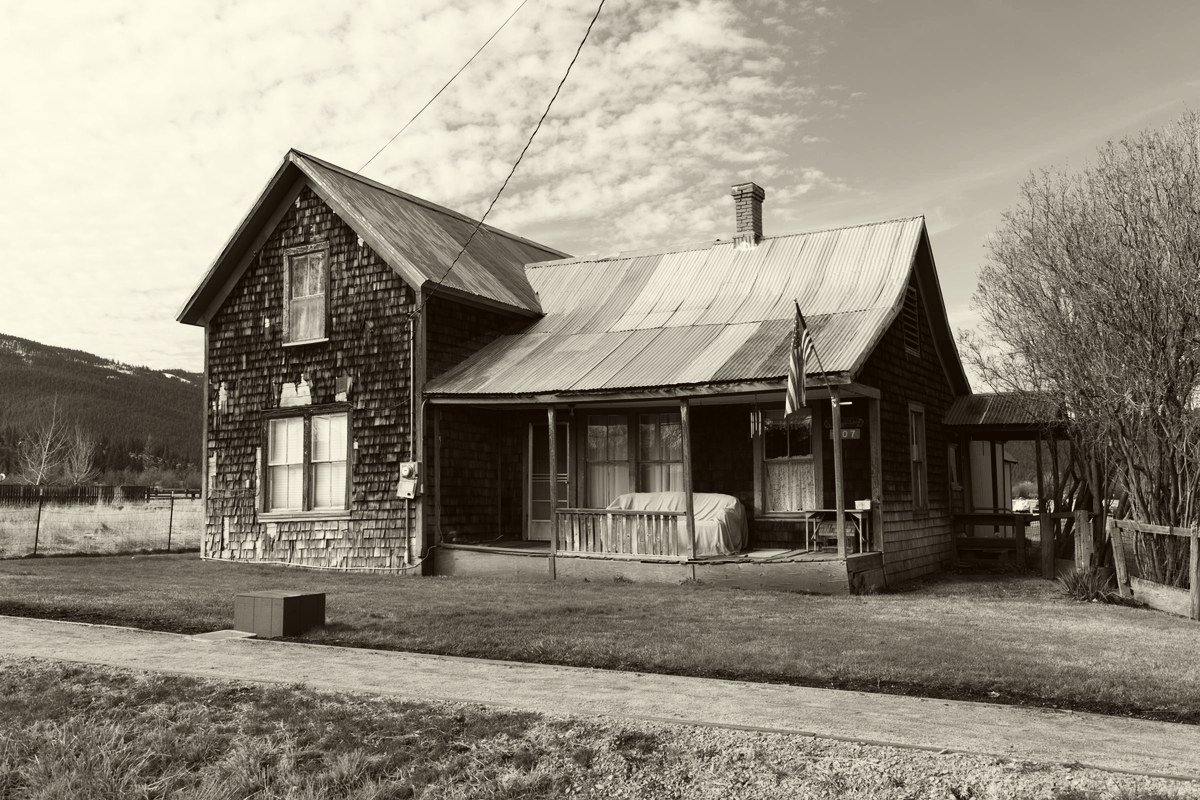
Nineteen years together, a house in Riverside, and no wedding. When one partner dies without a will, the survivor often learns that California never treated them as married and that his children now own her house.
The default rules give her almost nothing. Two doors stay open, and the better one closes a year after the death.
Does California recognize a common law marriage after years of living together?
No. California has required solemnization since an 1895 amendment to former Civil Code section 55 (Estate of Elliott (1913) 165 Cal. 339). Cal. Fam. Code § 300(a) says “Consent alone does not constitute marriage”; a license and solemnization must follow.
The exception is Fam. Code § 308: a marriage valid where it was contracted is valid here. Texas recognizes an informal marriage when a couple agreed to be married, then lived there as spouses and said so to others (Tex. Fam. Code § 2.401(a)(2)), and Colorado applies its own agreement test (In re Estate of Yudkin, 2021 CO 2). A couple who qualified in Houston or Denver and then moved to Riverside may be married here. That cuts both ways: the survivor may inherit, but a couple who split may need a divorce.
What does an unmarried partner inherit in California if there is no will?
Nothing. Cal. Prob. Code § 6401 gives a share to a surviving spouse, and § 6402(a) sends the rest, or everything absent a spouse, to descendants, then parents and other relatives. A partner of twenty years is not on the list.
A registered domestic partnership, filed with the Secretary of State (Prob. Code § 37), works like marriage under state law: the survivor has a spouse’s rights (Fam. Code § 297.5(c)). Since SB 30 (Stats. 2019, ch. 135) removed the same sex and over 62 limits, any two unmarried adults who meet § 297(b) can register.
The family allowance (§ 6540) and the probate homestead (§ 6521) are for a spouse, minor children and certain dependents. A spouse or registered partner also has first priority to serve as administrator under § 8461; an unmarried partner ranks as “any other person,” behind every relative and the creditors.
Can a surviving partner be treated as a spouse under the putative spouse rule?
Only if a marriage turned out to be defective. Under Cal. Fam. Code § 2251, a party to a void or voidable marriage who believed in good faith that it was valid is a putative spouse. In Estate of Leslie (1984) 37 Cal.3d 186, a husband whose Tijuana wedding was never recorded inherited as a surviving spouse. A dependent putative spouse may also sue for wrongful death (Code Civ. Proc. § 377.60(b)).
Ceja v. Rudolph & Sletten, Inc. (2013) 56 Cal.4th 1113 held that good faith turns on what the person actually believed. The limit is real, though: a partner who knows there was never a license or a ceremony has no marriage to be mistaken about. “We were basically married” describes a relationship, not a void marriage.
How long does a surviving partner have to enforce a Marvin agreement against the estate?
Usually one year from death, probate or not. Marvin v. Marvin (1976) 18 Cal.3d 660 held that unmarried partners can make enforceable agreements about earnings and property, express or implied.
Code Civ. Proc. § 366.3 covers a claim arising from a promise or agreement with the decedent to a distribution from an estate or trust, oral or written: one year after death, no tolling. In McMackin v. Ehrheart (2011) 194 Cal.App.4th 128, a partner of seventeen years claimed a promised life estate in the home; his Marvin claim fell under § 366.3, leaving him, six years out, to argue equitable estoppel. In Estate of Ziegler (2010) 187 Cal.App.4th 1357, a signed promise to leave a caregiver the house failed because the caregiver waited about a year and three weeks to claim it.
A support promise or a claim for the value of services looks more like an ordinary debt, with one year from death under § 366.2; if a probate is open, the creditor’s claim is due by the later of four months after letters issue or 60 days after notice (Prob. Code § 9100), which never extends the year. The survivor in Byrne v. Laura (1997) 52 Cal.App.4th 1054 filed one on a lifetime support promise the court held enforceable under Marvin. Proof is the other hurdle: Prob. Code § 21700 requires a writing signed by the decedent or clear and convincing evidence for a contract to leave property at death. My working rule is that every theory expires a year after death.
Lost a partner who promised to take care of you? The one year deadline runs from the date of death, not from the opening of probate.
What does staying unmarried cost in income, estate and property taxes?
Few couples face estate tax with a $15,000,000 basic exclusion for deaths in 2026 (26 U.S.C. § 2010(c)(3)). Above it, an unmarried survivor gets no marital deduction under § 2056(a) and no portability. Registering does not help: under Treas. Reg. § 301.7701-18(c), a registered partner is not a spouse for federal tax purposes.
At a married Californian’s death, § 1014(b)(6) gives both halves of community property a new basis. An unmarried survivor’s own half keeps its old basis. She also cannot treat an inherited IRA as her own or roll it over (IRS Pub. 590-B), and is usually on the ten year payout of § 401(a)(9)(H) unless she is no more than ten years younger than the owner (§ 401(a)(9)(E)(ii)(V)).
Under Proposition 13 (Cal. Const. art. XIII A), a change in ownership (Rev. & Tax. Code § 60) resets the assessment to market value. The interspousal exclusion in § 63 and the registered partner exclusion in § 62(p) do not reach an unmarried partner. Section 62.3 excludes a transfer at death between two people who together own 100 percent, were both owners of record for the prior year and both lived there as their principal residence that year, once the survivor signs an affidavit. Adding a partner to an existing title brings in the joint tenancy rules of § 65; get advice first.
How would this play out for a Riverside couple who never married?
Illustrative example. Marisol and Dan lived together in Riverside for nineteen years without marrying or registering, always in California. The house was in Dan’s name alone, bought in 2009 for $310,000 and now worth about $720,000. Dan died on August 11, 2026 with no will, leaving two adult children from an earlier marriage.
Under § 6402(a), the children take everything. Marisol is not a putative spouse; she knew there was no wedding. If Dan told her the house would be hers or that she could stay for life, that is a § 366.3 claim, due by Wednesday, August 11, 2027. If she paid half the mortgage, she may assert an ownership interest through a Probate Code 850 petition (§ 850(a)(2)(C)), and I would hold her to the same date.
The base value may rise no more than 2 percent a year (Rev. & Tax. Code § 51). At the full 2 percent over 17 lien dates (the actual yearly factor can be lower), $310,000 grows to about $434,075, a 1 percent base tax of about $4,341. The children’s inheritance resets the value to roughly $720,000, about $7,200 a year, and a buyout by Marisol at that price does the same. That is about $2,860 more a year, before local bonds and assessments. Had the two taken title together in 2009, § 62.3 would likely have excluded Dan’s half and kept the base near $434,000.
What can unmarried California couples do now to protect each other?
Cheapest first. An advance health care directive and a durable power of attorney come first, because a partner has no default authority over medical or financial decisions; beneficiary designations take minutes. A will, or better a revocable living trust naming the partner, replaces the intestacy rules. Hold title with § 62.3 in mind, and put any Marvin understanding in a signed cohabitation agreement. Registering changes California law for you; only marriage also changes federal tax law. Plenty of couples choose neither for good reasons and plan around it.
| At death | Married spouse | Registered domestic partner | Putative spouse | Unmarried partner |
|---|---|---|---|---|
| Intestate share | Spouse share (§ 6401) | Same as spouse (§ 297.5(c)) | As a spouse (Leslie) | None |
| Community property rights | Yes | Yes, under state law | Quasi-marital property (§ 2251) | Only by contract or title |
| Family allowance and homestead | Yes | Yes | Unsettled | No |
| Deadline to act | No special deadline | No special deadline | Prove status in probate | One year from death (§§ 366.3, 366.2) |
| Property tax reassessment at death | Excluded (§ 63) | Excluded (§ 62(p)) | Unsettled | Reassessed unless § 62.3 fits |
| Federal estate tax marital deduction | Yes (§ 2056) | No | Doubtful | No |
Frequently Asked Questions
Is there common law marriage in California?
No. California has required a license and solemnization since 1895. Under Family Code section 308, though, it recognizes a common law marriage validly formed in a state such as Texas.
Can my late partner’s children make me leave the house?
If the house was in your partner’s name alone and there is no will, it passes to the heirs. A claim based on a promise or your payments generally must be filed within a year of the death.
Do registered domestic partners have the same inheritance rights as spouses in California?
Yes, under California law. Federal tax law does not treat registered partners as spouses, so there is no federal marital deduction or spousal IRA rollover.
Does a Marvin agreement have to be in writing?
Not always. Against an estate, a promise to leave property at death needs a writing signed by the decedent or clear and convincing evidence under Probate Code section 21700.
Will the house be reassessed if my unmarried partner leaves it to me?
Usually yes. The cotenancy exclusion in Revenue and Taxation Code section 62.3 can prevent it if the two of you owned the whole house and both lived there for the year before the death.
How North Star Law Firm Can Help
North Star Law Firm prepares wills and powers of attorney and revocable living trusts for California couples, married or not, and represents survivors in trust and estate administration. Phillip Zagotti is a California attorney and a CPA.
To plan ahead or to protect a claim, contact North Star Law Firm or schedule a consultation.