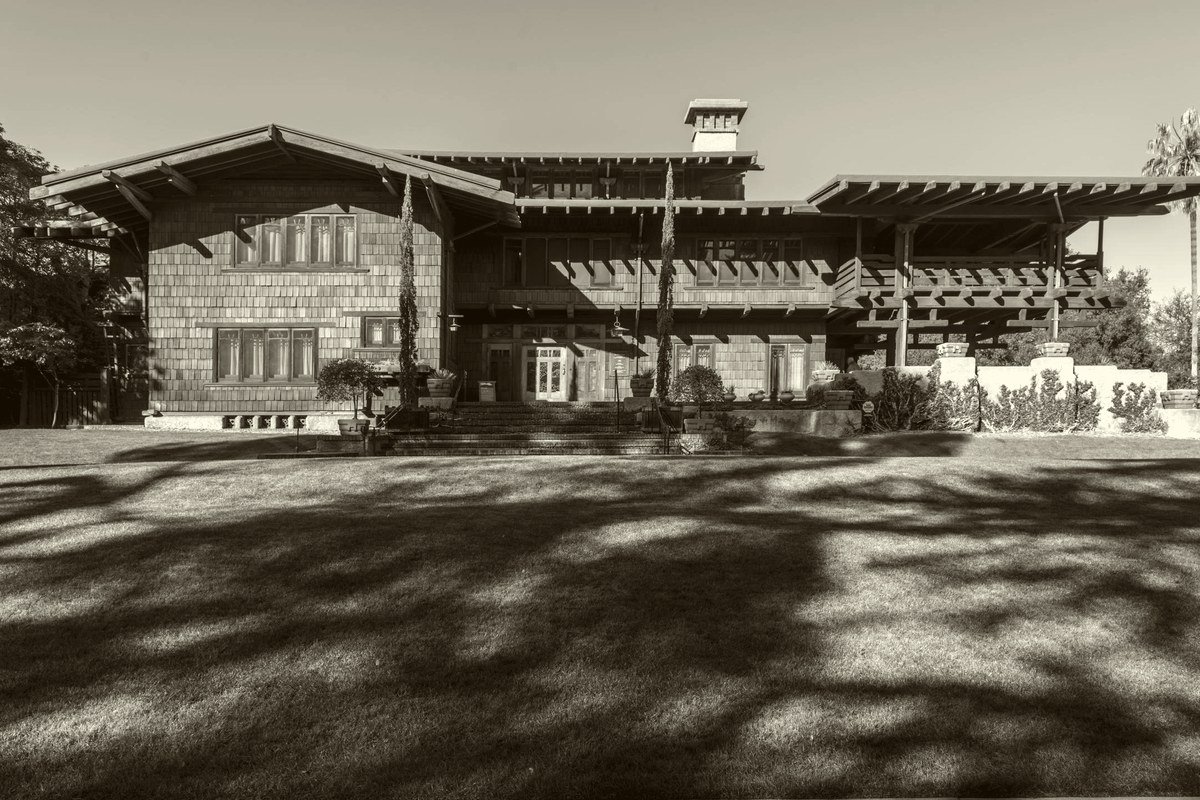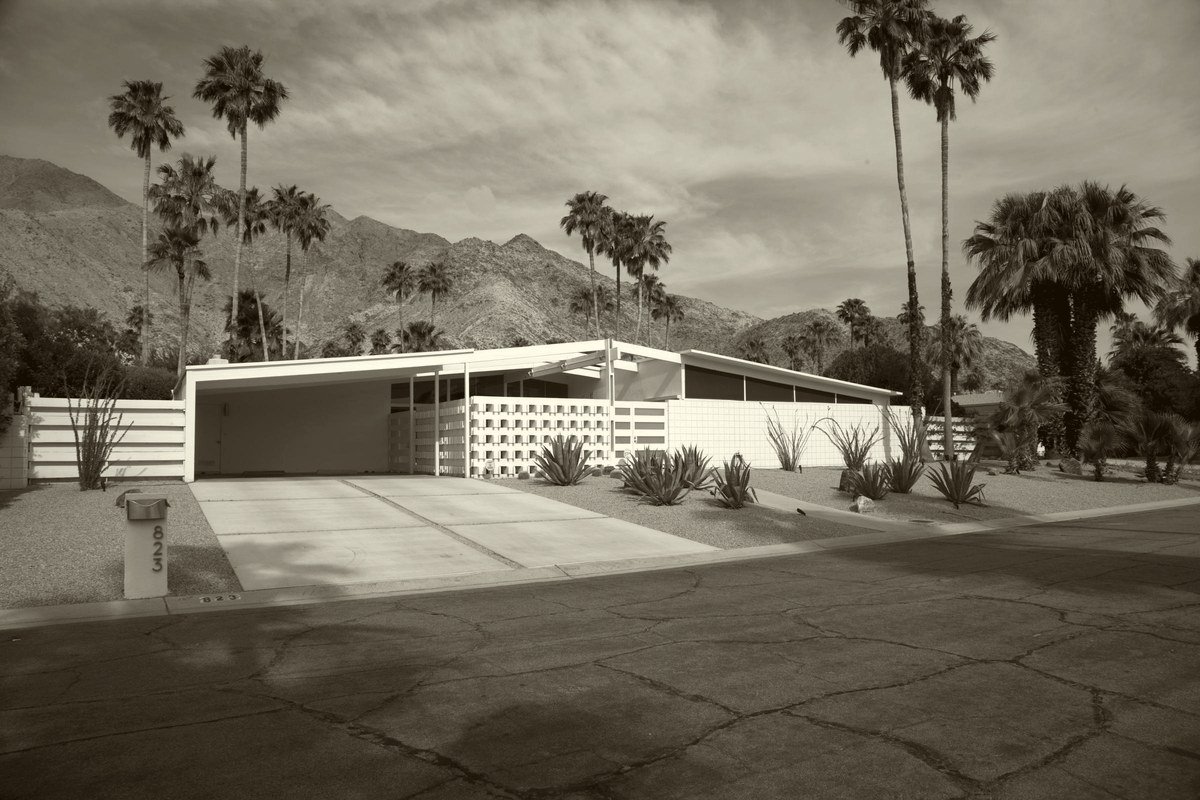
A daughter in Rancho Cucamonga gets the call from Osaka: her father has died, and his Fontana fourplex is still in his name. She finds a buyer, and escrow says title will not insure the sale until the IRS is dealt with. (The family is illustrative.)
That call is usually when I first hear about U.S. estate tax for a nonresident owner. Owners abroad, whether of an Inland Empire rental or a Palm Springs second home, rarely know the exemption in the news is not theirs.
When does a foreign owner of California real estate owe U.S. estate tax?
When the owner was neither a citizen nor domiciled here (a nonresident alien), IRC § 2101 taxes the part of the estate situated in the United States at the citizen rates in section 2001(c). The credit differs. A citizen dying in 2026 has a $15,000,000 basic exclusion under Rev. Proc. 2025-32; a nonresident alien gets a flat $13,000 credit under section 2102(b)(1), which is the tax on the first $60,000. “$60,000 exemption” is an approximation, and the rate hits 40 percent past $1 million. (A citizen married to a non-citizen has a different problem; see my post on QDOTs.)
Under Treas. Reg. § 20.2104-1(a), California land and buildings are U.S. property, as are furnishings kept here and stock of a U.S. corporation wherever the certificates sit. Section 2105 excludes insurance on the owner’s life, ordinary U.S. bank deposits not tied to a U.S. business, and portfolio debt.
Form 706-NA is required once U.S.-situs assets, plus certain lifetime gifts, exceed $60,000, due nine months after death (Form 4768 adds six months). Section 2002 makes the executor pay, and section 2203 says that if no one is appointed here, the executor is anyone “in actual or constructive possession” of the decedent’s property. That can be the daughter collecting rent. A representative who pays other debts first is personally liable under 31 U.S.C. § 3713(b), and IRC § 6324(a) imposes a 10-year lien and makes heirs who receive property liable up to its value, collected under section 6901.
Does a tax treaty lower the estate tax on a foreign owner’s California property?
Sometimes. The IRS treaty list has 15 countries. Australia, Austria, Denmark, France, Germany, Japan and the United Kingdom cover estate and gift tax; Canada, Finland, Greece, Ireland, Italy, the Netherlands, South Africa and Switzerland cover estate tax only (Canada’s through Article XXIX B of its income tax treaty). Mexico, China, India and Korea have none, so their residents get $13,000 and no more.
Where a treaty requires it, section 2102(b)(3)(A) replaces the $13,000 with a slice of the citizen credit: the applicable credit amount for the year of death times U.S.-situs assets over the worldwide gross estate. The 706-NA instructions name nine treaties, Japan’s among them, that trigger that rule. The price is disclosure of the worldwide estate, and section 2106(b) denies deductions for debts and expenses unless foreign assets appear on the return.
What would a Japanese owner’s estate owe on a Fontana fourplex?
Illustrative facts: Hiroshi lives in Japan and dies in 2026 owning a $900,000 Fontana fourplex outright and $300,000 of U.S. stocks at a U.S. broker. His worldwide estate is $6,000,000. He has no trust or LLC.
His U.S. gross estate is $1,200,000, and the tentative tax is $425,800 ($345,800 plus 40 percent of $200,000). Were he a Mexican resident, the $13,000 credit would leave $412,800 before deductions. Under the Japan treaty, the credit is $5,945,800 (the 2026 applicable credit amount, the tax on $15 million) times $1.2 million over $6 million, or $1,189,160. Section 2102(b)(4) caps it at the tax, so he owes nothing. On 2026 figures, U.S. tax appears only if his worldwide estate tops about $16.76 million.
Zero tax still means a 706-NA within nine months to claim the credit. If his two children, both in Japan, inherit and sell for $900,000 in 2027, the buyer withholds 15 percent, $135,000, under IRC § 1445(a), though section 1014(a) gave them a date-of-death basis and almost no gain. (For a buyer’s own home, it is 10 percent up to $1,000,000 and zero at $300,000 or less.) A Form 8288-B withholding certificate, normally acted on within 90 days, can reduce it. California’s R&TC § 18662 adds 3 1/3 percent of the price, about $30,000, unless the sellers certify a loss or zero gain, or elect withholding on actual gain, on Form 593. Individual sellers owe it whether or not they live here.
Why won’t a California title company close without an IRS transfer certificate?
Treas. Reg. § 20.6325-1 describes a transfer certificate as one “permitting the transfer of property of a nonresident decedent without liability,” and tells transfer agents and custodians to demand one. Hiroshi’s brokerage account stays frozen meanwhile. For land, the section 6324 lien drives it: a title insurer wants the certificate or proof nothing is owed. In my experience, that escrow demand is how most families learn Form 706-NA exists.
The IRS issues the certificate, commonly called Form 5173, once the tax “has been fully discharged or provided for.” Its transfer certificate page, updated May 5, 2026, asks for a faxed copy of the filed 706-NA and warns of 12 to 18 months of processing. No certificate is needed when the U.S.-situs estate is $60,000 or less, or for property handled by an executor “appointed, qualified and acting within the United States,” which makes ancillary probate less of a villain.
Does California probate apply when a foreign owner dies with property here?
Yes, if the deed is in the owner’s name. Ancillary administration, the proceeding for “a nondomiciliary decedent” (Cal. Prob. Code § 12501), starts with a petition under section 12510 in the county where the property sits (section 7052), San Bernardino for Fontana. If a foreign court admitted the will in a final ruling based on domicile and after notice, section 12523 has California admit it; otherwise section 12520(b) routes it through ordinary probate.
Section 8402 disqualifies a non-U.S. resident unless the will names that person executor, and section 8571 lets the court demand a bond from a nonresident. Statutory fees under sections 10800 and 10810 run on gross value: $21,000 each to the personal representative and attorney on Hiroshi’s fourplex.
A revocable trust or LLC holding title avoids ancillary probate, but neither escapes estate tax; for the trust, section 2104(b) reaches revocable transfers. Reassessment is separate. Proposition 19 (Cal. Const. art. XIII A, § 2.1) confines the parent-child exclusion to a family home or farm, and the Board of Equalization says a rental passing to a child does not qualify. In an LLC, R&TC § 64(c) reassesses when one person gains over 50 percent, and section 64(d) when “original coowners” who deeded the property in transfer over half cumulatively, which a death usually does.
Can a foreign owner give the property away or hold it through an LLC or foreign corporation?
Gifting the deed costs the most. IRC § 2511(a) taxes a nonresident alien’s gift “only if the property is situated within the United States,” and California land is. Section 2505 reserves the lifetime credit for citizens and residents, so everything over the $19,000 annual exclusion for 2026 is taxed: about $299,390 to deed the fourplex to one child, before treaty relief.
Section 2501(a)(2) exempts a nonresident alien’s gifts of intangibles, and an LLC interest is intangible. Interests held at death stay exposed. I would expect the IRS to look through a single-member LLC, disregarded for income tax, to the land, and the situs of a multi-member interest is unsettled. Deeding in and gifting the next week invites the argument that the gift was really land.
The classic blocker is a foreign corporation, since section 2104(a) treats stock as U.S. property only when the issuer is domestic. The cost is income tax: 21 percent federal tax under sections 11 and 882, California’s 8.84 percent franchise tax with an $800 minimum (R&TC § 23153), a 30 percent branch profits tax under section 884 unless an income tax treaty cuts it, and FIRPTA withholding when the corporation sells. An LLC owning California property owes the $800 tax under R&TC § 17941, plus the section 17942 fee from $250,000 of California income.
| Structure | U.S. estate tax | Gift tax on lifetime transfer | FIRPTA on sale | California probate | Annual California cost | Prop 13 reassessment risk |
|---|---|---|---|---|---|---|
| Direct ownership | Yes; $13,000 or treaty credit | Yes; $19,000 exclusion (2026) only | 15% of price; Form 593 too | Ancillary administration | Property tax only | At death; rentals get no Prop 19 exclusion |
| California or Delaware LLC | Likely yes | None on membership interests | Same as direct if single-member | None for the parcel | $800 plus fee at $250,000 | § 64(c) or (d) transfers over 50% |
| Foreign corporation | No | None on shares | 15% on the corporation’s sale | None for the parcel | $800 minimum; 8.84% of income | § 64(c) if one heir gains control |
Frequently Asked Questions
Is the $60,000 estate tax figure for foreign owners adjusted for inflation?
No. The $13,000 credit is fixed by statute and did not move when the citizen exclusion rose to $15 million for 2026. Only a treaty can enlarge it.
Does the estate have to file Form 706-NA if a treaty wipes out the tax?
Yes, when U.S.-situs assets exceed $60,000. The treaty credit is claimed on the return, and the transfer certificate depends on it.
How long does an IRS transfer certificate take?
The IRS currently says 12 to 18 months after it receives everything it needs. A complete file with English translations keeps the clock from restarting.
Can a child who lives abroad be executor of a California estate?
Only if the will names that child. Probate Code section 8402 otherwise disqualifies anyone who is not a U.S. resident, and the court may require a nonresident executor to post a bond.
Will the buyer withhold 15 percent even if the heirs have no gain?
Yes, unless an exception applies or the IRS issues a withholding certificate first. Any excess is claimed as a credit on the heirs’ U.S. return for the year of sale.
How North Star Law Firm Can Help
North Star Law Firm prepares trust and estate tax returns, including Form 706-NA, and handles estate and trust administration for cross-border families who own California property. It also drafts revocable living trusts and reviews ownership structures through its real estate tax strategy work. Phillip Zagotti is a California attorney and a CPA admitted to the U.S. Tax Court.
If a parent abroad owns California property, or has just died owning it, contact North Star Law Firm or schedule a consultation before escrow opens.