
Tax Law ✦ Sales & Payroll Tax
The Audit Is About Your Records. Bring Better Ones.
California Department of Tax and Fee Administration sales and use tax audits, and Employment Development Department payroll tax and worker classification assessments, are records fights first and legal fights second. North Star Law Firm rebuilds the records, challenges the estimates, and handles the petitions, appeals conferences, and CUIAB hearings that follow. Attorney-CPA. Flat fees. Statewide.
The Short Answer
The auditor estimated. Estimates can be beaten with documents.
A CDTFA sales tax audit or an EDD payroll audit rarely turns on a disputed point of law. It turns on whether the auditor’s reconstruction of your sales or your workforce holds up. When records are thin, the CDTFA projects from a sample, a markup test, or bank deposits, and the EDD reclassifies every 1099 worker as an employee and assesses tax on all of them. Both agencies estimate high, and both are required to accept a better-supported number when you produce one. That is CPA work, and it is why an attorney-CPA firm wins these cases at the petition and appeals-conference stage far more often than at hearing.
- CDTFA sales and use tax audits: markup tests, observation tests, bank deposit analyses
- Petitions for redetermination and CDTFA appeals conferences; Office of Tax Appeals
- EDD worker classification audits under the ABC test (Labor Code § 2775) and Borello
- Petitions to the California Unemployment Insurance Appeals Board and ALJ hearings
- Responsible-person liability: R&TC § 6829 (CDTFA) and Unemp. Ins. Code § 1735 (EDD)
- Coordinated federal defense: IRS Form SS-8, Section 530 relief, trust fund recovery penalty
The Process
Where is your case, and what happens next?
Both agencies follow a defined path from audit to assessment to appeal, and each step has a short deadline. Missing one turns a defensible estimate into a final bill.
| Stage | CDTFA (sales and use tax) | EDD (payroll tax) |
|---|---|---|
| Audit | Field or desk audit, usually three years (eight if no return was filed); auditor issues a working papers package | Payroll audit, usually three years, focused on worker status, unreported wages, and officer compensation |
| Assessment | Notice of Determination | Notice of Assessment |
| First appeal | 30 days to file a petition for redetermination (R&TC § 6561); appeals conference with the Appeals Bureau | 30 days to petition the CUIAB (Unemp. Ins. Code § 1222); hearing before an administrative law judge |
| Second appeal | 30 days to appeal the CDTFA decision to the Office of Tax Appeals | Appeal from the ALJ to the CUIAB Appeals Board; then writ to superior court |
| Collection | Liens, levies, seller’s permit revocation, successor liability, responsible-person assessment | Liens, levies, and personal assessment against responsible officers |
| Settlement | CDTFA settlement program during the appeal; offer in compromise (R&TC § 7093.5) | EDD settlement during the appeal; offer in compromise (Unemp. Ins. Code § 1177) |
How does a CDTFA sales tax audit actually work?
The auditor compares reported taxable sales to everything else that measures sales: federal returns, bank deposits, purchase invoices, 1099-Ks from card processors, and, for restaurants, bars, and retailers, a markup analysis (cost of goods sold times an assumed markup) or a short observation test extrapolated across the audit period. Exempt sales are disallowed unless resale certificates and exemption documentation are on file. Where the auditor cannot tie things out, the CDTFA estimates, and the estimate becomes the Notice of Determination.
We attack the method and the inputs. A markup computed from a bad sample, an observation test taken in a peak week, deposits that were loans or transfers rather than sales, resale certificates that were never requested from the customer file: each is a documented adjustment, and the appeals conference exists to make them. Where records are truly missing, we reconstruct them from third-party data, which is a forensic accounting exercise.
What happens in an EDD worker classification audit?
The EDD applies the ABC test of Labor Code § 2775: a worker is an employee unless the business proves the worker is free from its control, performs work outside the usual course of its business, and is customarily engaged in an independent trade. Prong B is where most businesses lose. When they do, the EDD assesses unemployment insurance, employment training tax, state disability insurance, and personal income tax withholding on every reclassified worker’s pay, plus penalties, and it often assesses the officer personally under Unemp. Ins. Code § 1735.
The defenses are the exemptions from AB 5 that revert to the older Borello test (many licensed professionals, business-to-business contracts that meet the twelve-factor test of § 2776, referral agencies, and others), the withholding abatement for workers who reported and paid their own income tax, and, on the federal side, Section 530 relief and the reduced rates of I.R.C. § 3509. We handle the CUIAB petition and hearing and coordinate the IRS side so a state loss does not become a federal one.
Can the state come after me personally?
Yes, and this is the part business owners underestimate. When a corporation or LLC fails with sales tax unpaid, the CDTFA can assess any responsible person who willfully failed to pay under R&TC § 6829, and the EDD can do the same for payroll tax under Unemp. Ins. Code § 1735. Both are personal liabilities, both survive bankruptcy as trust fund taxes, and both are defended on the facts of who actually controlled the money. The federal trust fund recovery penalty under I.R.C. § 6672 is the third leg, and the interview that establishes it is one you should never attend without counsel.
The Attorney-CPA Difference
The agency reconstructed your business from the outside. We reconstruct it from the inside.
- Sales and payroll records rebuilt from source documents and third-party data
- Audit methodology challenged line by line at the petition and appeals-conference stage
- ABC test, Borello, and AB 5 exemptions analyzed worker by worker
- Responsible-person assessments defended on control of the funds
- Federal exposure (SS-8, Section 530, § 6672) handled in the same engagement
Proof, In Print
He wrote the book on tax defense. Literally.
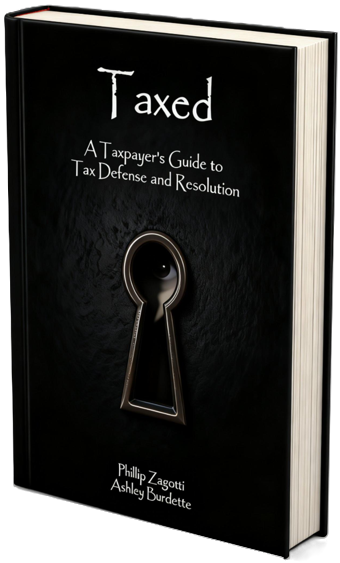
Phillip Zagotti co-authored Taxed: A Taxpayer’s Guide to Tax Defense and Resolution with Ashley Burdette, a plain-English guide to audits, collections, and the resolution tools on this page. Read it before you call anyone. When you decide you want an advocate, the consultation is free.
Questions & Answers
Sales tax and payroll tax questions from California businesses
I sold the business. Why is the CDTFA billing me for the buyer’s tax?
It is usually the other way around: a buyer who does not obtain a CDTFA tax clearance certificate becomes liable for the seller’s unpaid sales tax up to the purchase price (R&TC §§ 6811 to 6814). If you are the seller, the buyer’s failure is not your liability; if you are the buyer, we request the clearance before closing.
My workers signed independent contractor agreements. Doesn’t that settle it?
No. Under the ABC test the label the parties chose is irrelevant; the question is control, the nature of the work, and whether the worker runs an independent business. A well-drafted agreement helps prove prong A and prong C, but prong B is decided by what the business does.
The CDTFA audit period is eight years. Is that legal?
If no returns were filed for the periods in question, yes; the normal three-year limit under R&TC § 6487 extends to eight years for unfiled periods, and there is no limit for fraud. Filing the missing returns, even late, is often the first step.
Can I settle a CDTFA or EDD assessment for less?
Both agencies run settlement programs during the appeal that consider the risks of litigation, and both accept offers in compromise, generally for businesses that have closed. Which door to use depends on the strength of the defense and whether the business is still operating.
The auditor’s number is a starting point. Bring the documents that move it.
A free audit review with an attorney-CPA, and a flat fee in writing before you commit.