
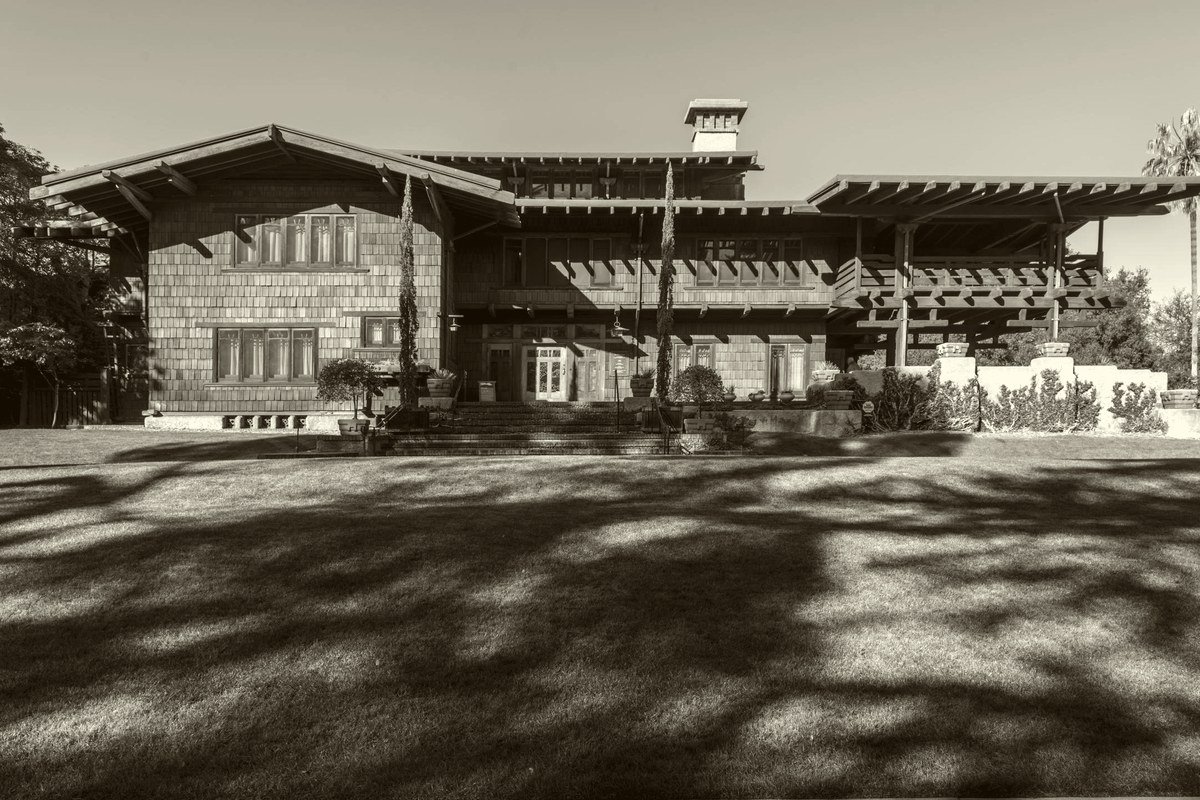
Linda and Ray live in Redlands. Their daughter Maya is in escrow on a $700,000 house in Riverside with $35,000 saved and an 80 percent first mortgage lined up. Her parents can cover the other $105,000 from savings built during their marriage, and want it repaid so her two brothers come out even. (The family and numbers here are illustrative.)
It is the family loan I see most in California, where starter homes in Riverside, Temecula, Roseville or Rancho Cucamonga run $600,000 to $800,000.
How much interest does a California parent have to charge on a loan to a child?
At least the applicable federal rate (AFR) for the month the loan is made. IRC § 1274(d) sets three tiers: short-term up to three years, mid-term over three and up to nine, long-term beyond nine. For October 2026, Rev. Rul. 2026-19 puts them at 4.25, 4.61 and 5.22 percent compounded annually, or 4.17, 4.52 and 5.10 percent compounded monthly.
Maya’s 15-year amortizing note is long-term. At 5.10 percent, $105,000 costs her $835.81 a month, about $5,244 of it interest in year one. A nine-year mid-term note would cost $1,185.15 a month.
When does the IRS treat money from a parent as a gift?
First, on price. Dickman v. Commissioner, 465 U.S. 330 (1984), held that interest-free family loans “resulted in taxable gifts of the reasonable value of the use of the money lent,” and Congress answered with IRC § 7872. For a below-AFR gift term loan, section 7872(d)(2) fixes the gift on day one: the amount lent minus the present value of the payments. Section 7872(c)(2) ignores gift loans totaling $10,000 or less, and up to $100,000, section 7872(d)(1) caps imputed income at the borrower’s net investment income, treating $1,000 or less as zero. Married parents count as one lender under section 7872(f)(7).
Second, on substance. The Tax Court weighs the nine factors of Miller v. Commissioner, T.C. Memo. 1996-3, aff’d, 113 F.3d 1241 (9th Cir. 1997): paperwork, payments, ability to repay and tax reporting. In Estate of Bolles v. Commissioner, T.C. Memo. 2020-71, tried in San Francisco, a mother’s advances to her son were loans through 1989 and gifts once she accepted he could not repay, and the Ninth Circuit affirmed in an unpublished 2024 memorandum.
What did the Tax Court actually decide in Estate of Galli?
Barbara Galli lent her son Stephen $2.3 million in February 2013 on an unsecured note at 1.01 percent, which the note called that month’s mid-term AFR. He paid interest three times before she died on March 7, 2016. No gift tax return was filed, the estate reported the note at $1,624,000, and the IRS called the shortfall from face an unreported gift.
Judge Mark V. Holmes’s March 5, 2025 order in Docket Nos. 7003-20 and 7005-20 granted the estate summary judgment on the gift question. The IRS did not concede; it met the estate’s bank records, note and income tax returns with one declaration and lost. Under section 7872, the court said, the transfer “was not a gift at all.” Valuation was “not the subject of this motion.” The gift case closed with a stipulated no-deficiency decision on April 3, 2025, and the estate case settled with one on March 25, 2026. No judge ruled on the discount, and the order is not precedent.
Do California community property and usury rules change a family loan?
Community property does. Marital savings are community property, so both spouses are the lender, and Cal. Fam. Code § 1100(b) bars one spouse from giving community personal property away without the other’s written consent. I have both sign. The Form 709 instructions treat a community-property gift as made half by each spouse, so each parent’s $19,000 exclusion for 2026 applies with no section 2513 election. California has no gift tax on post-1982 gifts and, per the State Controller, no estate tax for deaths after 2004, so the only ceiling is the $15 million federal exclusion in Rev. Proc. 2025-32.
At the first death, Cal. Prob. Code § 100 gives the survivor half, so IRC § 2033 reaches only the decedent’s half of the note. Section 1014(b)(6) resets basis in both halves to date-of-death value. That helps with a house and hurts with a discounted note: when the survivor collects full principal, IRC § 1271(a)(1) makes the excess over basis gain. (My post on A/B trusts covers where that half goes.)
Usury is a non-issue at the AFR. Cal. Const. art. XV, § 1 caps a loan made primarily for personal, family or household purposes, which a child’s home purchase is, at 10 percent (other loans get the higher of 10 percent or 5 percent over the San Francisco Fed’s rate on advances to member banks), and parents are not exempt lenders. A 5.10 percent note is nowhere close. The risk is “fixing” an old interest-free loan with a steep rate or years of back interest, which does not undo the interest section 7872 already imputed and can cross the cap, risking forfeited interest and treble damages under Cal. Civ. Code § 1916-3.
What paperwork should a California family home loan include?
Both parents and Maya sign a written note with a fixed maturity and the rate stated as a number from that month’s ruling. Payments go from her account to theirs on schedule; in Galli, that bank trail won the motion. A deed of trust on the house gets recorded with the Riverside County Recorder, because Treas. Reg. § 1.163-10T(o) treats interest as deductible under IRC § 163(h)(3) only on debt secured by an instrument “recorded, where permitted.”
Her lender will ask where the $105,000 came from. A Fannie Mae gift letter must state “that no repayment is expected,” so it cannot cover money the family means to collect, and lying in a mortgage file violates 18 U.S.C. § 1014. Disclose the loan. The recorded deed of trust shows the lender the $105,000 is secured debt, not a disguised gift. Her parents report the interest on Schedule B, and Maya lists her parents on Schedule A, line 8b, since family lenders issue no Form 1098.
What happens to a family loan when the lending parent dies?
Treas. Reg. § 20.2031-4 presumes a note is worth unpaid principal plus accrued interest unless the executor proves the rate, maturity or another cause makes it worth less. Galli’s estate made that argument for its 1.01 percent note, and the settlement left it untested.
The rule runs both ways. The mid-term AFR was 0.38 percent in October 2020 (Rev. Rul. 2020-20) and 4.43 percent in October 2023 (Rev. Rul. 2023-18); it is 4.61 percent now. A 2020 note is worth less than face today; Maya’s is the reverse bet. If the surviving parent dies in 2031 with about $78,440 owed and similar loans priced at 3.5 percent, her 120 remaining payments are worth roughly $84,500. At 7.5 percent, about $70,400. That value matters more for equalizing siblings than for estate tax.
Parents who would rather forgive the note while alive can forgive up to $38,000 a year under the annual exclusion. The risk is a prearranged plan: under Rev. Rul. 77-299, the IRS treats a note the lender always meant to forgive as a gift of the full amount on day one. Make each forgiveness a separate written decision after the payment comes due.
Otherwise the note sits in the parents’ revocable trust, and the trust should carry instructions. Cal. Prob. Code § 21135 charges a lifetime gift against an at-death share only if the instrument or a writing by the parent or child says so, and section 6409 sets the same rule for advancements in intestacy. A loan is not a gift, so absent a clause the trustee simply holds a receivable from a beneficiary. Section 16000 binds the trustee to the instrument, and sections 16003 and 16010 add impartiality between Maya and her brothers and a duty to take reasonable steps to collect. I draft the trust to say whether the balance is forgiven or offset against her share, and at balance or appraised value, much as Mary Bolles’s trust reduced each child’s share by loans plus interest.
| Approach | Gift tax result | Parent income tax | Child income tax | At parent’s death | What goes wrong |
|---|---|---|---|---|---|
| Outright gift | Half from each spouse; Forms 709 above $38,000 | None | Nothing to deduct | Nothing to collect | Siblings shorted absent a § 21135 writing |
| Documented AFR loan | No gift (§ 7872) | Interest on Schedule B | Deductible under § 163(h)(3) if itemizing | Note at fair market value, above or below face | Skipped payments or planned forgiveness |
| Undocumented “loan” | Likely a gift under Miller or Bolles | Possible imputed interest | No deduction | Disputed claim against a beneficiary | False gift letter, missing Forms 709, sibling litigation |
Frequently Asked Questions
Can I lend my child money interest-free in California?
Yes, but federal law imputes interest at the AFR unless an exception applies. Gift loans totaling $10,000 or less are ignored, and up to $100,000 the imputed income is limited to the child’s net investment income.
Is the October 2026 AFR locked in for the whole loan?
For a term loan, yes. A 15-year note signed in October 2026 keeps the 5.22 percent long-term rate, or its monthly equivalent, for its life. A demand loan floats with the short-term rate.
Can my child deduct interest paid on a family home loan?
Only if a recorded deed of trust secures the note and your child itemizes. The interest goes on Schedule A, line 8b, with your name, Social Security number and address.
Do we have to tell the mortgage lender that part of the down payment is a loan?
Yes. A gift letter must say no repayment is expected, so it cannot cover money you plan to collect. Disclose the loan and expect the lender to count the payment.
What happens to the loan if I die before my child repays it?
The balance is an asset of your estate or trust at fair market value, and with community property only your half is in your estate. Your trust should say whether the balance is forgiven or charged against that child’s share.
How North Star Law Firm Can Help
North Star Law Firm drafts family notes and matching revocable living trust clauses, and it advises trustees on collecting or offsetting family loans in trust administration and on the trust and estate tax returns that follow. Phillip Zagotti is a California attorney and a CPA admitted to the U.S. Tax Court.
If you are about to fund a child’s down payment, contact North Star Law Firm or schedule a consultation before escrow closes.