
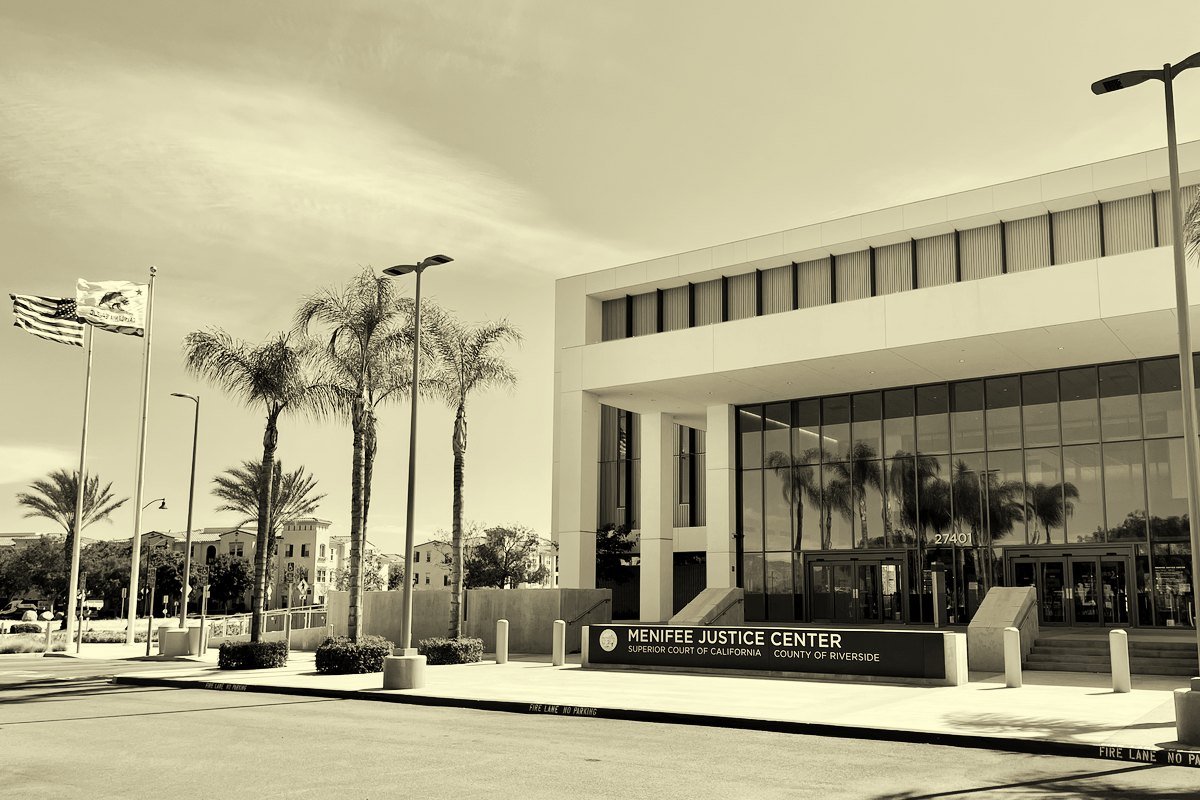
A Moreno Valley warehouse worker rear-ended in 2024 files Chapter 7 a year later and checks “No” on the line asking about claims against third parties. After the discharge, her injury lawsuit hits a summary judgment motion arguing she swore to the bankruptcy court that the claim did not exist.
That defense is judicial estoppel, which the Supreme Court addressed on June 11, 2026, in Keathley. The omission can usually be repaired, but through the bankruptcy court, and creditors may share the recovery.
What did the Supreme Court decide in Keathley?
Thomas Keathley was in a confirmed Chapter 13 plan in Arkansas, paying creditors 100 percent, when a Buddy Ayers Construction driver hit him in 2021. He told his bankruptcy lawyer and sued in Mississippi, but nobody amended the schedules until the defense raised it. The Fifth Circuit still barred the suit, because its rule called an omission inadvertent only if the debtor lacked knowledge of the facts or any motive to conceal.
In Keathley v. Buddy Ayers Construction, Inc., No. 25-6 (U.S. June 11, 2026), a unanimous Court vacated. Justice Jackson wrote that courts “should look to the totality of the circumstances surrounding the omission.” It only assumed estoppel applies in bankruptcy and left the bad-faith question open.
Justice Thomas, joined by Justice Gorsuch, wrote that the doctrine itself “merits a closer look.” Justice Sotomayor added that estoppel mostly rewards a defendant “neither misled nor impacted by the delayed disclosure,” and that the calculus “may look different” after discharge, citing the reopening statute.
What changes in a California federal court that already followed Ah Quin?
Less than in Texas. Hamilton v. State Farm Fire & Casualty Co., 270 F.3d 778 (9th Cir. 2001), barred a Los Angeles debtor who listed “None” for contingent claims and then sued his insurer, applying the factors of New Hampshire v. Maine, 532 U.S. 742 (2001): a clearly inconsistent position, a court that accepted the first one, and unfair advantage.
Ah Quin v. County of Kauai Department of Transportation, 733 F.3d 267 (9th Cir. 2013), then held that once a debtor reopens and corrects the schedules, “rather than applying a presumption of deceit,” the court asks whether the omission was “in fact, inadvertent or mistaken.” Keathley quoted that line with approval.
The change is reach. Ah Quin kept a narrower test for debtors who never reopened; Keathley has no such limit, so in our view knowing about the accident should no longer be enough. Reopening is still the best fact a debtor can show.
Does a Riverside County judge apply Keathley or California’s own test?
California’s own. Jackson v. County of Los Angeles, 60 Cal.App.4th 171 (1997), set out a five-element test that the California Supreme Court restated in Aguilar v. Lerner, 32 Cal.4th 974 (2004), ending with the requirement that “the first position was not taken as a result of ignorance, fraud, or mistake.” Even when every element is met, applying it is discretionary.
Cloud v. Northrop Grumman Corp., 67 Cal.App.4th 995 (1998), refused to infer intent from a missing wrongful termination claim and gave the debtor time to secure “the bankruptcy trustee’s participation in, or abandonment of” it. Miyahara v. Wells Fargo Bank, N.A., No. B317726 (Cal. Ct. App. Feb. 9, 2024), called estoppel an “extraordinary remedy” and held mistake was a fact question unfit for demurrer.
In Riverside County Superior Court, Keathley persuades but does not bind. Cloud’s move is the practical one: Code Civ. Proc. § 368.5 lets the court substitute the trustee without the case abating, and a trustee never took an inconsistent position.
Who owns the claim, and how fast do you need to reopen?
Probably not you. Under 11 U.S.C. § 541(a)(1), every claim existing on the petition date became estate property. Scheduled but unadministered property returns to the debtor at closing under § 554(c); unscheduled property “remains property of the estate” under § 554(d). Cusano v. Klein, 264 F.3d 936 (9th Cir. 2001), held that such a claim “continues to belong to the bankruptcy estate,” leaving the debtor without standing.
So move to reopen under 11 U.S.C. § 350(b) “to administer assets”; under Rule 5010, a trustee is appointed when needed, as here. Rule 1009(a) allows amendments only “before the case is closed,” so reopening comes first. Schedules are verified under Rule 1008; a knowing and fraudulent false declaration is a crime under 18 U.S.C. § 152(3), and § 157 reaches fraud schemes. Correcting the omission voluntarily is the best proof of mistake.
Chapter 13 differs. Section 1306(a)(1) adds post-petition claims to the estate until the case closes, while § 1306(b) leaves the debtor in possession. Confirmation vests property in the debtor under § 1327(b) unless the plan says otherwise. Keathley left open whether a continuing duty to disclose exists, but Balthrope v. Sacramento County Department of Health & Human Services, 398 F. App’x 285 (9th Cir. 2010) (unpublished), and Miyahara require amendment.
Did an injury or wage claim never make it onto your bankruptcy schedules? Every week between finding the gap and reopening the case helps the defense. An attorney and CPA can reopen the case and run the exemption and tax numbers before the hearing.
How do California exemptions change who benefits from the recovery?
If the money would go to the debtor anyway, estoppel protects no creditor. Under Code Civ. Proc. § 703.140(b)(11)(E), a payment “on account of personal bodily injury” is exempt up to $36,750, the figure effective April 1, 2025 (Form EJ-156). Paragraph (11)(B) covers an employment settlement “to the extent reasonably necessary for the support” of the debtor, and a renter can add the (b)(5) wildcard.
The alternative, Code Civ. Proc. § 704.140(b), exempts an injury recovery “to the extent necessary for the support of the judgment debtor,” with no cap but a fight over need. When exemptions swallow the claim, the trustee usually abandons it, which ends the standing problem.
A late exemption will be tested. Law v. Siegel, 571 U.S. 415 (2014), bars denying one for bad faith alone, but In re Elliott, 523 B.R. 188 (9th Cir. BAP 2014), leaves room for state-law grounds, and Rule 4003(b)(2) gives the trustee a year after closing to attack a fraudulent one.
What does the fix look like for a Moreno Valley worker?
Assume our worker is hit on State Route 60 in March 2024 and files Chapter 7 in the Central District’s Riverside Division in April 2025. Her “No” on Statement of Financial Affairs question 9 is accurate, since she has not sued. Schedule A/B item 33, covering claims “whether or not you have filed a lawsuit,” is not. All figures and dates are illustrative.
She gets a no-asset discharge in July 2025, sues in Riverside County Superior Court in February 2026 within Code Civ. Proc. § 335.1‘s two years, and faces an estoppel motion in August. In September she reopens, amends Schedules A/B and C, and claims $36,750 plus $15,000 of remaining wildcard. The trustee hires her injury lawyer under 11 U.S.C. § 327(e) and substitutes in.
A $150,000 settlement, less a $60,000 fee, $6,000 of costs, and a $14,000 lien, nets $70,000. She keeps $51,750; the estate’s $18,250 goes to the trustee and her $52,000 of debt. Barring the claim outright would have helped only the defendant.
Now the CPA’s point: physical injury damages are excluded under IRC § 104(a)(2); emotional distress alone is not. A wage or termination recovery is mostly taxable, and under IRC § 1398 the Chapter 7 estate is a separate taxpayer reporting its share on Form 1041 (IRS Publication 908). Draft the settlement’s allocation and withholding with both taxpayers in mind.
| Situation | Who owns the claim | Federal court after Keathley | California state court | The fix |
|---|---|---|---|---|
| Claim omitted by mistake, case closed | Chapter 7 estate | Totality test; reopening weighs heavily | Estoppel unlikely if mistake shown | Reopen and amend |
| Defendant moves before debtor reopens | Estate; debtor lacks standing | Debtor may be barred; trustee gets time | Trustee substitution favored | Reopen now; continue the hearing |
| Claim fully exempt | Debtor after exemption or abandonment | Weak case for estoppel | Discretion favors debtor | Amend Schedule C; seek abandonment |
| Chapter 13 post-petition claim | Estate, debtor in possession | Disclosure duty left open | Confirmation counts as acceptance | Amend; consider plan modification |
| Deliberate concealment | Estate | Estoppel likely | Estoppel likely | Trustee may still sue |
Frequently Asked Questions
Can I still pursue a lawsuit I forgot to list in my Chapter 7 bankruptcy?
Often yes, but maybe not in your own name. An unscheduled claim stays in the bankruptcy estate after closing under 11 U.S.C. section 554(d). Reopen the case and amend the schedules, then let the trustee pursue the claim or abandon it to you, ideally before the defense motion is heard.
What did Keathley v. Buddy Ayers Construction decide?
In its June 11, 2026 decision, a unanimous Supreme Court held that courts deciding whether a bankruptcy omission was inadvertent must weigh the totality of the circumstances, not only knowledge and motive to conceal. Two Justices questioned the doctrine itself, and Justice Sotomayor doubted it should apply during an open bankruptcy.
Does Keathley apply in California state court?
Not as binding law. California courts use the five-element test from Jackson v. County of Los Angeles and Aguilar v. Lerner, which excuses a position taken through ignorance, fraud, or mistake and treats estoppel as discretionary. Keathley is persuasive and points the same way.
How much of a personal injury recovery can a California debtor exempt?
Under Code of Civil Procedure section 703.140(b)(11)(E), a personal bodily injury payment is exempt up to $36,750 as adjusted April 1, 2025, and a renter may add the wildcard. The alternative in section 704.140 protects a recovery only to the extent necessary for support.
Is a personal injury settlement taxable if the bankruptcy trustee collects it?
Damages for personal physical injuries or physical sickness are excluded under IRC section 104(a)(2), and a Chapter 7 estate computes income like an individual. Emotional distress alone and most employment recoveries are taxable, and the trustee reports the estate’s share on Form 1041 under IRC section 1398.
Do Chapter 13 debtors have to disclose claims that arise after filing?
Keathley left that open, so treat the answer as yes. Section 1306(a)(1) makes post-petition claims estate property until the case closes, and both a Ninth Circuit memorandum and a 2024 California Court of Appeal decision treat amending the schedules as required while the case is open.
How North Star Law Firm Can Help
North Star Law Firm helps debtors and former debtors across the Inland Empire and the Sacramento area reopen Chapter 7 cases or amend Chapter 13 schedules to capture a missed claim, and we work out exemptions and settlement splits as part of our bankruptcy practice. Phillip Zagotti is a California attorney and a CPA admitted to the U.S. Bankruptcy Court for the Central District of California, so the schedules and the tax reporting come from one desk.
If a lawsuit or claim never made it onto your bankruptcy schedules, contact North Star Law Firm or schedule a consultation.